Recently, I took a life-changing trip to Dubai with a few members from my Jewish community. The trip was arranged by Visions of Abraham. The goal of the journey was simple but profound: to listen, learn, and explore what peace and coexistence can look like in practice between Jews and Muslims.
The trip itself was short. We spent just three days across Abu Dhabi and Dubai. But the impact was anything but small.
We met with business leaders, educators, religious figures, government representatives, and community members. Across every conversation, the message was universal: the vast majority of people we met want peace. They want coexistence. They want prosperity together. They believe we have far more in common than what divides us.
That alone challenged something deep inside me.
The Stories We Inherit
I am the oldest grandchild of Holocaust survivors. Like many children and grandchildren of survivors, I was raised with a heightened sense of vigilance. A protective instinct passed down through lived experience. My grandparents had friends, neighbors, people they trusted, who betrayed them. The lesson they learned, and lovingly passed on, was simple: be careful. Don’t trust too easily. You never really know who is safe.
That is generational trauma. Every culture carries its own version of it.
For me, that trauma was reinforced in a very modern way on September 11th, 2001. I remember life before 9/11. Airports without security lines. Shoes on. Water bottles allowed. And then everything changed. The fear I was taught suddenly became real, personal, and lasting. The narrative that took hold for many of us was dangerous in its simplicity: they want to hurt us.
For the last 24 years, that story lived quietly in the background of my generation’s mind.
A Moment of Pause
One of the leaders of our recent journey, Eli Epstein, shared his own story of being raised by Holocaust survivors and the generational trauma that was passed on to him. He spoke about how business relationships in the region have slowly changed his worldview. While doing business in the Middle East, he got to know people as humans, not headlines. Coexisting with the Sheikhs forced him to question the lessons he had inherited.
That resonated with me deeply, and this trip became a “stopping the cycle” moment for me.
Because what we heard again and again was not hate, but longing for peace. Not hostility, but hope. Leaders spoke openly about wanting to coexist with Israel and the Jewish people. They talked about Jews as cousins, both biblically and culturally. About building trade relationships, shared prosperity, and a future rooted in mutual respect. About loving each other.
I asked hard questions. Ones I had been carrying for decades. How do you tell who is dangerous? How do you know who to trust?
The answer wasn’t clean or perfect. But one thing became clear: extremism represents a minority, not the whole, of the Middle East. Allowing fear to define an entire people only ensures the cycle of mistrust continues.
Peace as a Grassroots Strategy
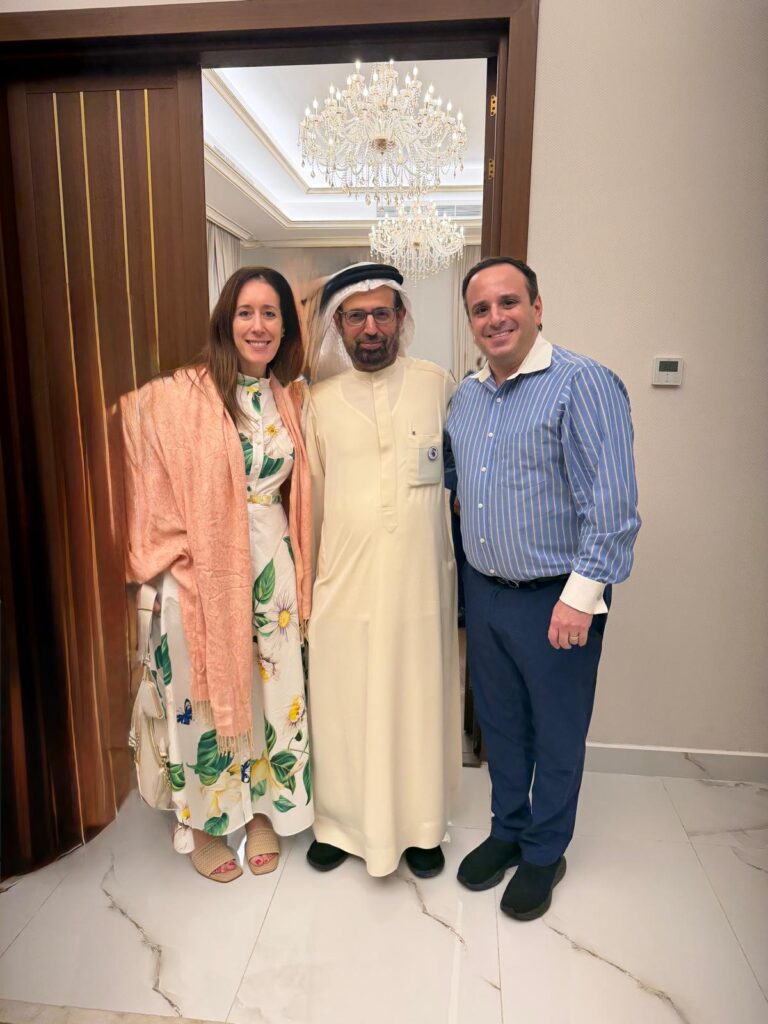
The emotional heart of the trip came during an evening hosted by a prominent educator and advisor close to the country’s leadership, Dr. Ali. He welcomed us into his home, served us a beautiful dinner, and spoke at length about peace, coexistence, and responsibility. Then he introduced us to his students and team.
Many of them were young, thoughtful, and passionate about a vision for peace and coexistence.
Their strategy is grassroots, based on education and relationship-building. Showing the world that Muslims want to be seen not as threats, but as peace-loving people committed to harmony and progress.
In that moment, I realized something powerful: peace doesn’t start at summits. It starts in living rooms.
I found myself offering what I know best. Connection. I shared that I have deep relationships in India, where some of their grassroots efforts are based, and offered my network to support their work. It felt meaningful to contribute not just with opinions, but with access.
When Connection Turns Into Action
Another evening brought us to the home of a Jewish woman who had left France and settled in Dubai with her four young children. She spoke openly, emotionally, about her desire to provide her children with a Jewish school. About how hard it felt to carry that vision alone. As she spoke, I thought: this is where change actually happens.
I connected her with a close friend from a philanthropic family whose passion is education. Serendipitously, the family patriarch happened to be in Dubai at the same time and was deeply moved by her vision. I was so grateful to play a small role in helping her realize her dream of opening this school that will do so much good for future generations.
This is what changemaking looks like. It doesn’t have to be grand gestures. Just paying attention. Making the introduction. Trusting that the right people will do the rest.
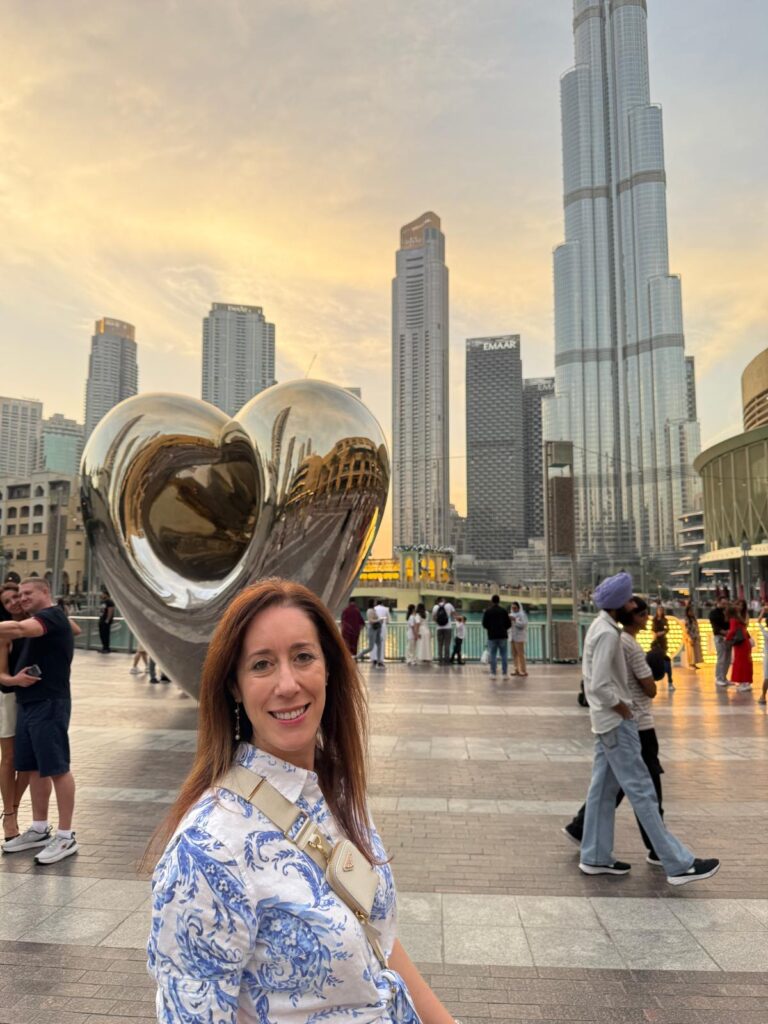
A Country That Thinks in Generations
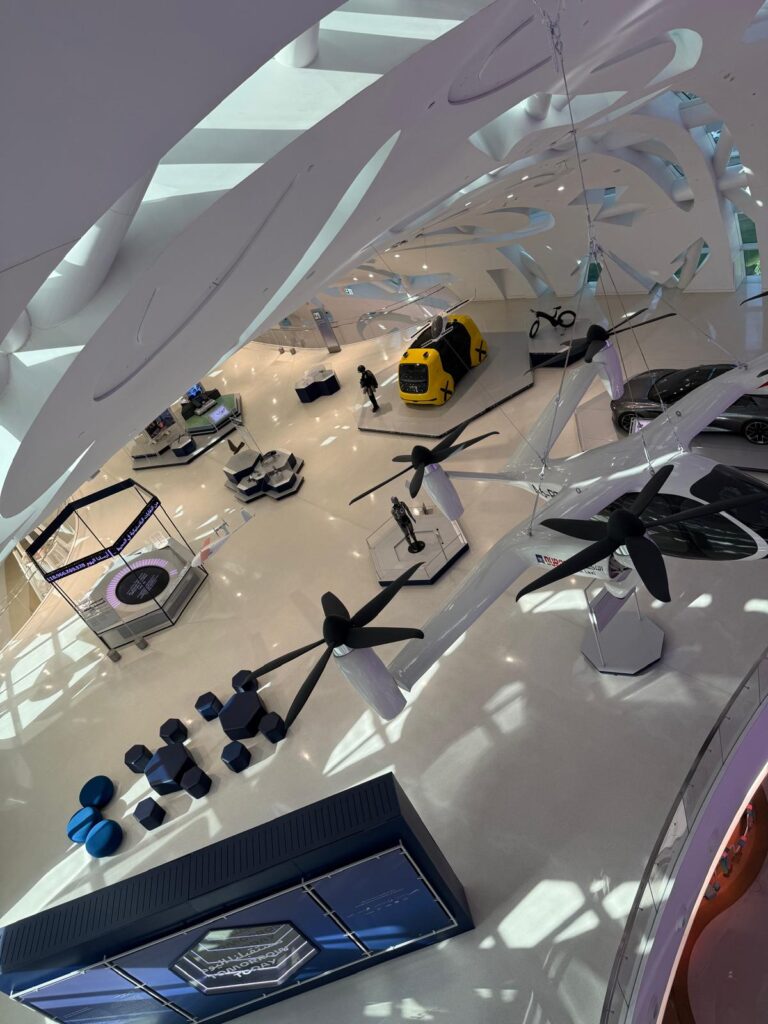
One of the most striking experiences of my trip was visiting the Museum of the Future. I have never seen a country think so far ahead. Here in the United States, we operate in four-year increments, while the UAE is planning toward 2070.
The museum paints a vivid picture of life 50 years from now. Robotics. Renewable energy. Health and wellness. Presence. Connection.
One exhibit focused entirely on being in the present moment. On vibration, sound, energy, and awareness. It echoed much of what I’ve been learning recently: that the more present we are, the more powerful our connections become.
Peace requires that same long-term thinking. It asks us to move beyond reaction and into responsibility.
Symbols That Matter
We visited a Holocaust museum built on royal land, with the explicit intention of educating people about Jewish history. Walking through it, I felt something shift. It mattered that this story was being told there. That acknowledgement by the country’s rulers is a powerful step toward true progress.
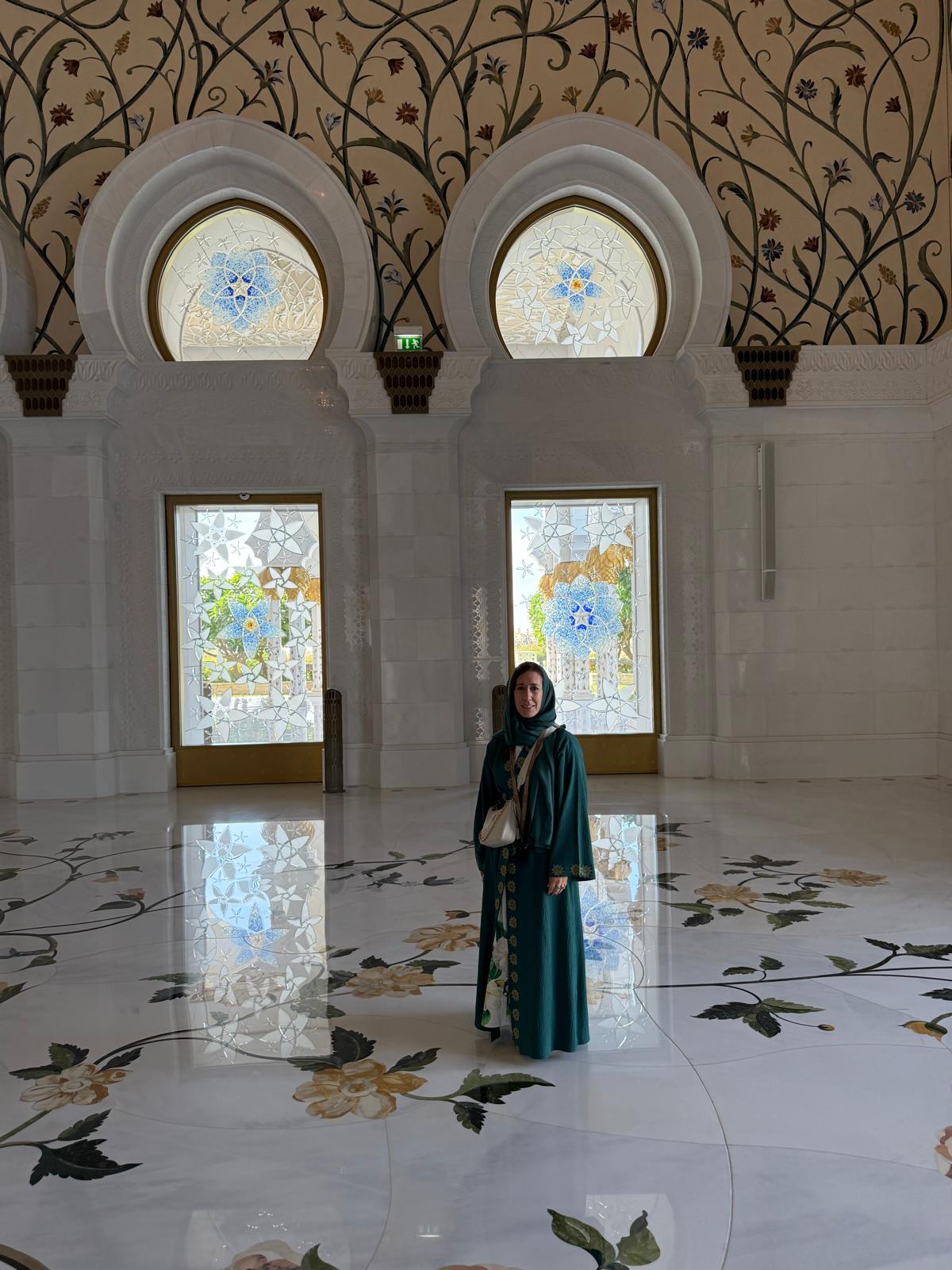
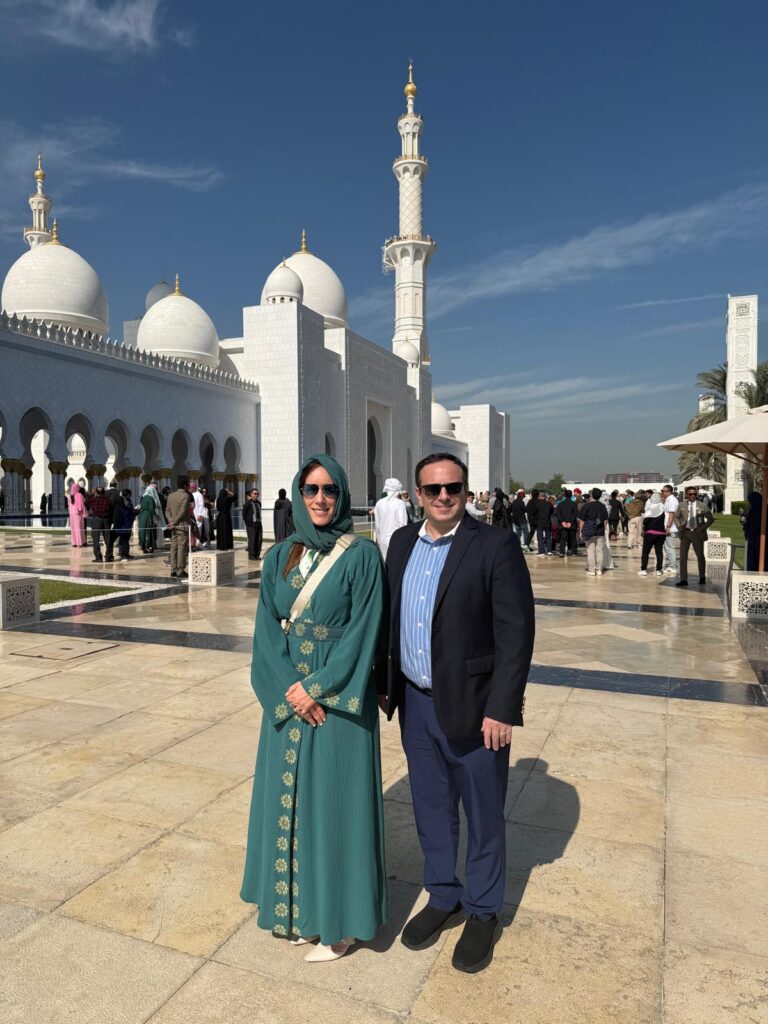
We visited the Grand Mosque, covering ourselves fully out of respect and connecting with Muslim traditions. We also toured the Israeli embassy, quietly and carefully. We met with leaders in trade and finance. Each moment felt intentional and opened my eyes to what the future could look like.
A Full-Circle Reminder
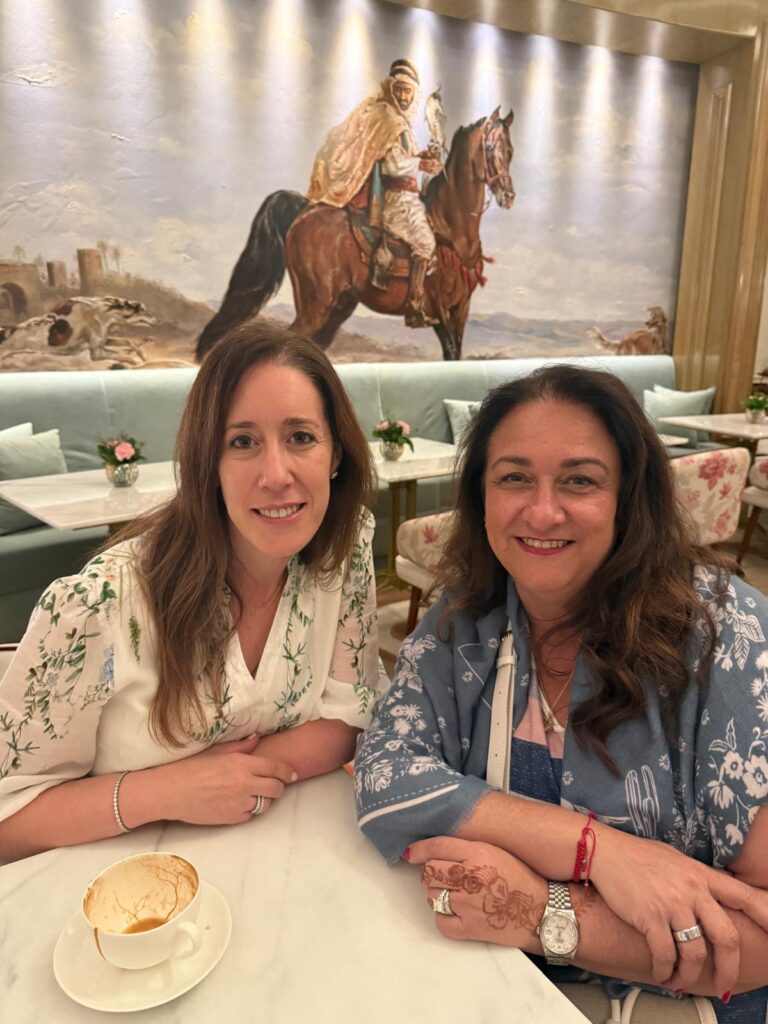
In the middle of all this, something unexpected happened. A client of ours, unable to travel onward to India due to a visa issue, was stranded in Dubai. We ended up meeting there, halfway across the world.
It felt like a wink from the universe. A reminder that when you stay open, connection keeps finding you.
You don’t need to solve geopolitics to create peace.
Peace begins when we stop assuming harm and start choosing curiosity. When we listen instead of label. When we connect instead of retreat. When we decide to stop passing down fear and start modeling trust.
This trip reminded me that cycles can be broken. Narratives can change. And each of us has more power than we think.
The question is simple: where can you build a bridge?
Because peace, like leadership, always starts with an open mind and one courageous connection.


