Recently, I had the incredible experience of watching my 13 year-old daughter participate in the inaugural Presidential AI Challenge, a national competition that challenged K-12 students across the country to use artificial intelligence to solve real-world problems in their communities.
The competition gave students a prompt and an opportunity, but what they did with it was up to them. My daughter decided to focus on a problem that affects some of the most vulnerable people in our communities: helping individuals experiencing homelessness or facing barriers to traditional employment find stable, sustainable work.
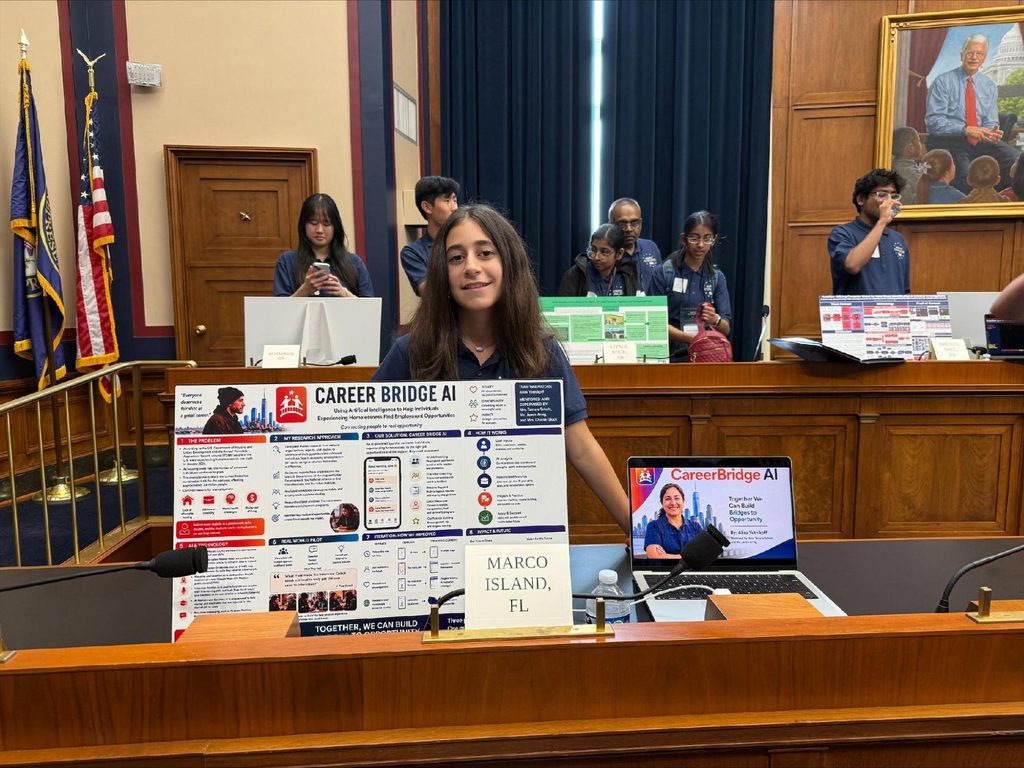
She developed Career Bridge AI, a platform designed to help unhoused job seekers prepare for employment. Instead of simply listing open positions, the architecture incorporates an internal AI engine designed to coach users through interview skills and target test questions, generating a concrete readiness score. It also features a dedicated portal for employers and a specialized tracking module for caseworkers to monitor client progress.
She was one of thousands of students who participated in the competition, and her project advanced through the state and regional rounds to the national finals in Washington, D.C. Along the way, she had the opportunity to present her work to judges, education officials, and other leaders working in technology and AI.
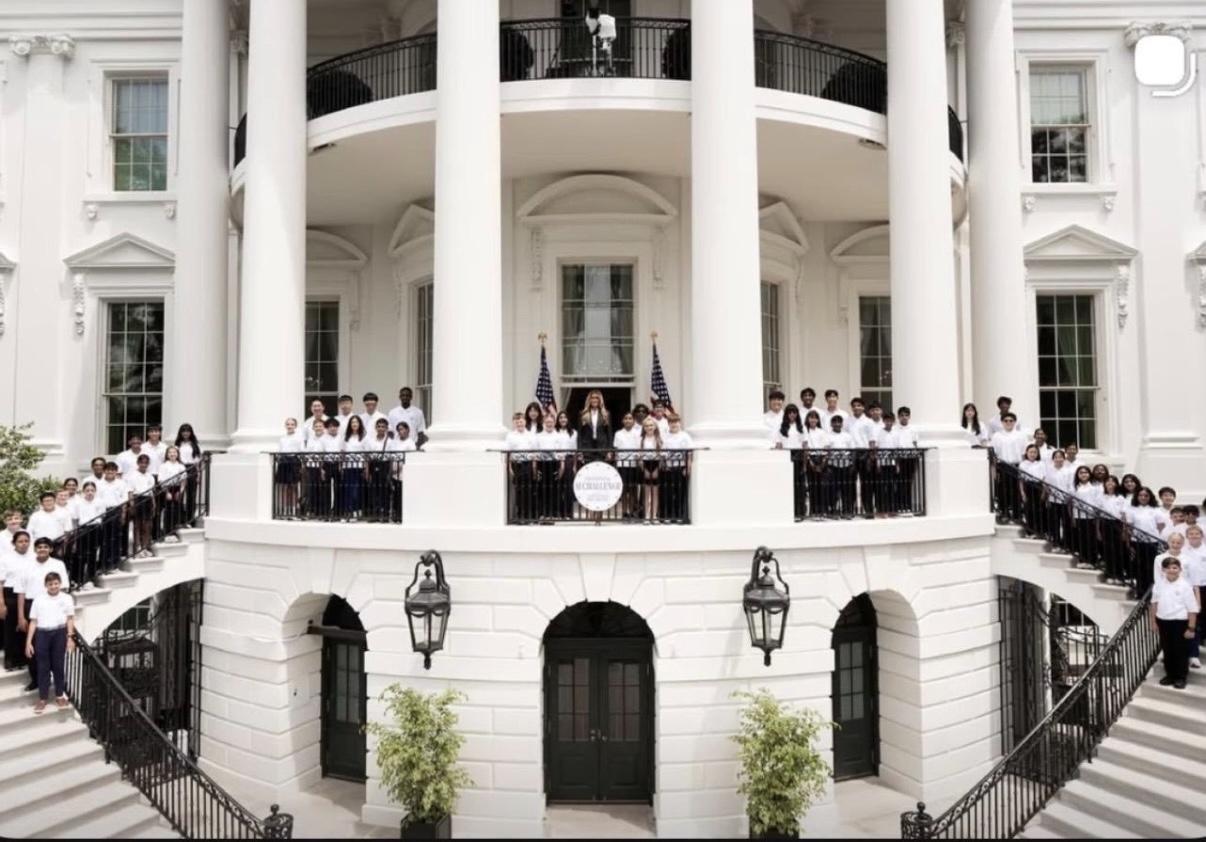
And then, at the end of the experience, she found herself in the White House with other super smart kids, being recognized for what they had built. She didn’t win the whole thing, but she walked away with a $7,500 prize and the experience of a lifetime.
As her mom, of course I was incredibly proud.
But as someone who has spent much of my career thinking about entrepreneurship, technology, and the future of the workplace, I came home thinking about something even bigger than my daughter’s incredible accomplishment.
What happens when we give an entire generation of young people the tools to turn their ideas into reality?
AI is changing what is possible
We spend a lot of time talking about how AI will change the workplace, which jobs it might replace or transform, and what skills our children will need to compete in an AI-driven economy.
Those are important conversations, but I think there is another question we should be asking: What will this generation create because AI exists?
My daughter is growing up in a completely different technological environment than I did. She doesn’t see AI as something mysterious or futuristic. When she was given a problem to solve, using AI to help develop a solution was simply one of the tools available to her. Growing up in this digital age, her brain is wired completely differently than my generation’s.
That changes the starting point.
For a long time, building technology required access to specialized knowledge, expensive software, or someone who knew how to code. Today, a young person with an idea can use AI to research a problem, brainstorm solutions, write code, test concepts, create content, and build a prototype much faster than previous generations could.
The value is no longer simply in knowing the answer. It is in knowing which questions to ask, understanding which problems are worth solving, recognizing the needs of other people, evaluating whether an idea actually works, and having the creativity and persistence to keep improving it.
Those are entrepreneurial skills, and they are going to become increasingly valuable.
One of the most exciting parts of this experience was seeing how differently students approached the challenge. They weren’t all trying to solve the same problem or build the same kind of technology. They were bringing their own interests, experiences, and observations about the world into the process and using AI as a tool to explore what might be possible.
That is where I think the real opportunity lies.
Imagine giving students the ability to identify a problem in their own community and then giving them the tools to actually try to solve it.
A student who cares about food insecurity could build something to help connect surplus food with families who need it. Another student might develop a tool to help older adults access community resources. Someone passionate about the environment could create technology that helps neighborhoods understand their energy use or reduce waste.
The ideas will not all work. Many of them will probably fail.
But that is not a reason not to try. In fact, learning how to test an idea, learn from failure, and try again may be one of the most valuable things we can teach young people.
We need to help young people develop the confidence to look at a problem and believe they can be part of the solution.AI gives us an extraordinary opportunity to do that.
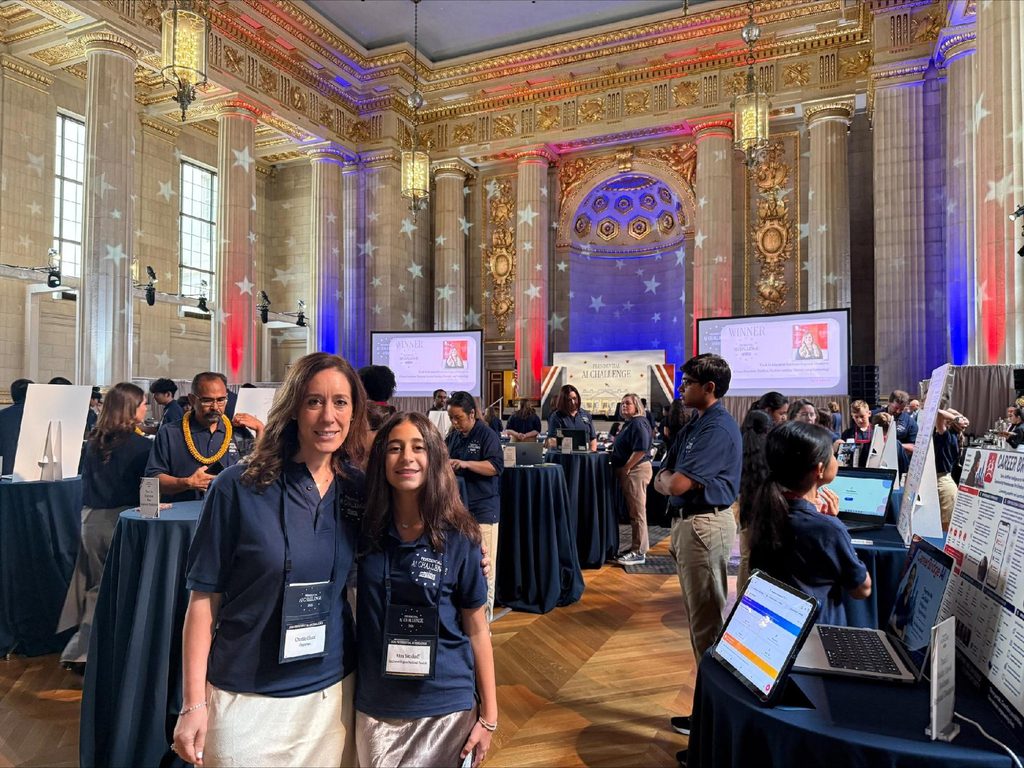
The trip to Washington was an experience we will never forget. There was an evening at the Air and Space Museum, presentations to judges at the Mellon Auditorium, opportunities to share the projects with leaders in education and technology, and ultimately a ceremony in the White House where the student finalists were recognized.
When my daughter presented Career Bridge AI directly to the Department of Education, the chair of the committee walked over to evaluate her model and was so impressed by the operational logic that he brought a group of colleagues from his department over to review her presentation.Sharing that experience with my daughter at the White House was beyond special.
But what I will remember most is seeing a room full of young people who had been given an opportunity to build something and had taken it seriously. In turn, the leaders of this country took them seriously. They came from different parts of the United States, had different interests and experiences, and had developed completely different ideas, but they shared one thing: they had been given permission to think beyond the obvious answer.
What if every student had the chance to identify a problem they cared about, learn how to think entrepreneurially, and use AI to build a solution?
What if we stopped asking young people to wait until they were older to make an impact?
The next generation will build things we can’t imagine yet
It’s impossible to predict what AI will look like five, ten, or twenty years from now.
What I do know is that today’s children will grow up with capabilities that previous generations simply didn’t have, and I believe they are going to use those capabilities in ways that surprise all of us.
My daughter’s project wasn’t created because she had years of experience in the workforce or a background in developing technology. She was given a challenge, chose a problem she wanted to address, and had access to tools that helped her turn an idea into something tangible.
That is what excites me.
Not just what AI can do today, but what happens when an entire generation grows up knowing how to use it.
The next generation won’t just be consumers of AI. They will be builders, problem-solvers, entrepreneurs, and creators who use these tools to tackle challenges we haven’t even thought of yet.
And if we give them the right foundation, the right opportunities, and the freedom to experiment, I think the possibilities are endless. I’m so excited to see all the ways in which this younger generation will improve the world we live in using technology.